Easter Egg Silhouette: Your Secret to Festive Design
When spring arrives, the design world shifts its palette. Pastel tones replace heavy winter hues, and floral motifs begin to dominate our screens and print layouts. For designers, marketers, and small business owners, this seasonal transition presents a specific challenge: how do you create assets that feel festive without looking generic? Enter the Easter Egg Silhouette. Decorative Element. This isn't just a font; it is a specialized design asset that serves as a bridge between typography and illustration, offering a distinct silhouette style that instantly communicates the spirit of the season.
Visual Characteristics and Personality
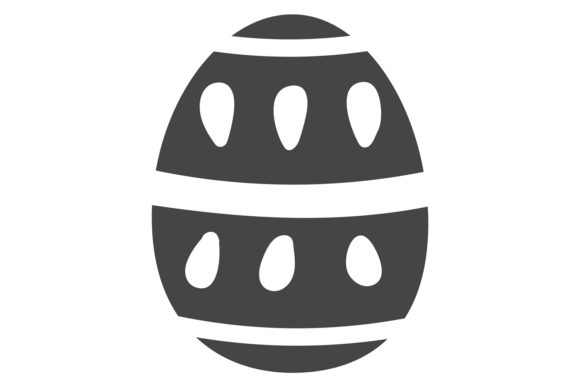
Unlike a standard serif font or a clean sans serif font, the Easter Egg Silhouette. Decorative Element operates on a different visual frequency. Its core personality is playful yet sophisticated. It relies on the recognizable shape of the egg, but instead of a solid fill, it utilizes intricate patterns, cutouts, and textures to form the silhouette. This creates a visual style that is both bold and delicate. It possesses the weight of a display font but the intricacy of a lace pattern.
The overall appeal lies in its ability to act as a standalone graphic element. When you install this typeface, you aren't just gaining access to letters; you are gaining access to a library of scalable vector graphics. The "personality" of the file—whether provided as an EPS, SVG, or transparent PNG—adapts to the context. In a minimalist setting, it adds necessary texture. In a busy layout, it serves as a focal point. It avoids the "clip art" look often associated with holiday kits, leaning instead toward a modern typography aesthetic where negative space plays a crucial role.
Strategic Applications for Branding and Marketing
For entrepreneurs and brand strategists, the utility of the Easter Egg Silhouette extends far beyond a simple holiday card. Its primary strength lies in packaging design and social media graphics. Imagine a boutique bakery launching a seasonal macaron box. Using the silhouette as a repeating pattern on the tissue paper inside the box elevates the unboxing experience from simple to premium. It transforms a standard product into a curated gift.
In the digital space, this decorative element is invaluable for content creators and bloggers. It works exceptionally well as a watermark for photography or as a background texture for quote graphics. Because the element is isolated on a white background in its source files, it offers maximum versatility. You can easily overlay it on pastel backgrounds or use it as a knockout mask in web design headers. It allows for a cohesive brand identity during the spring months without requiring a complete rebrand.
Editorial and Publishing Use Cases
Publishers and editorial designers face the constant pressure of filling space meaningfully. The Easter Egg Silhouette solves the "empty corner" problem in magazine layouts. It functions beautifully as a decorative drop cap or a section divider. In children’s publishing, it adds a layer of whimsy to activity pages or coloring book covers. However, it is equally effective in high-end editorial design. For instance, a luxury lifestyle magazine might use a monochrome silhouette as a subtle background element to anchor a feature article on spring fashion, adding thematic depth without overwhelming the typography.
Technical Integration and Design Workflow
Integrating the Easter Egg Silhouette. Decorative Element into your workflow requires a shift in how you view the asset. If you are working with the SVG or EPS versions, you have full control over color and scaling. This is the preferred route for professional logo design or high-resolution print work. You can deconstruct the silhouette, change the fill colors to match specific Pantone swatches, or even use the silhouette as a clipping mask for floral photography.
For those using the transparent PNG files, the asset is ready for immediate drag-and-drop application. This is ideal for quick-turnaround projects like Instagram stories, email headers, or digital invitations. The key to using these assets effectively is understanding visual hierarchy. Because the silhouette is a decorative element, it should rarely compete with your primary headline font. Instead, use it to frame the content. Place it behind your call-to-action button to draw the eye, or use it to create a border that guides the reader’s gaze inward.
Evaluating Fit and Licensing
Before committing to this asset for a commercial campaign, it is vital to review the licensing terms. As a premium font or design asset, the Easter Egg Silhouette is typically licensed for specific usage scopes. Ensure your license covers the intended medium—whether it is for merchandise, digital advertising, or print-on-demand products.
Testing is also a crucial step. Do not simply drop the element into your final design. Create mockups. Place the silhouette against your brand’s specific color palette. Does the intricate detailing get lost on a busy background? If so, you may need to simplify the surrounding design or apply a subtle drop shadow to lift the element off the page. The goal is to maintain readability and clarity. While the silhouette itself isn't "read" like text, the visual noise it creates must be managed so it supports, rather than hinders, the viewer's experience.
Conclusion
The Easter Egg Silhouette. Decorative Element is more than a seasonal novelty; it is a versatile tool for creative professionals. It bridges the gap between illustration and typography, offering a unique solution for branding, packaging, and digital marketing. By understanding its visual personality and technical applications, designers and entrepreneurs can leverage this asset to create memorable, professional, and engaging spring campaigns that resonate with their audience. Whether used as a subtle background texture or a bold foreground graphic, it proves that seasonal design can be both festive and refined.